
In recent years, the demand for cross-border logistics between China and Europe has grown rapidly. With increasing trade volumes, diversified cargo types, and the rising need for stable delivery timelines, choosing the right logistics solution has become more important than ever. Whether you are shipping consumer goods, industrial equipment, or e-commerce parcels, selecting the correct transport mode directly impacts cost, efficiency, and customer satisfaction.
Below are the key logistics options for China–Europe transport, along with how to determine the best solution for your business.
1. Rail Transport: The Best Balance of Speed and Cost
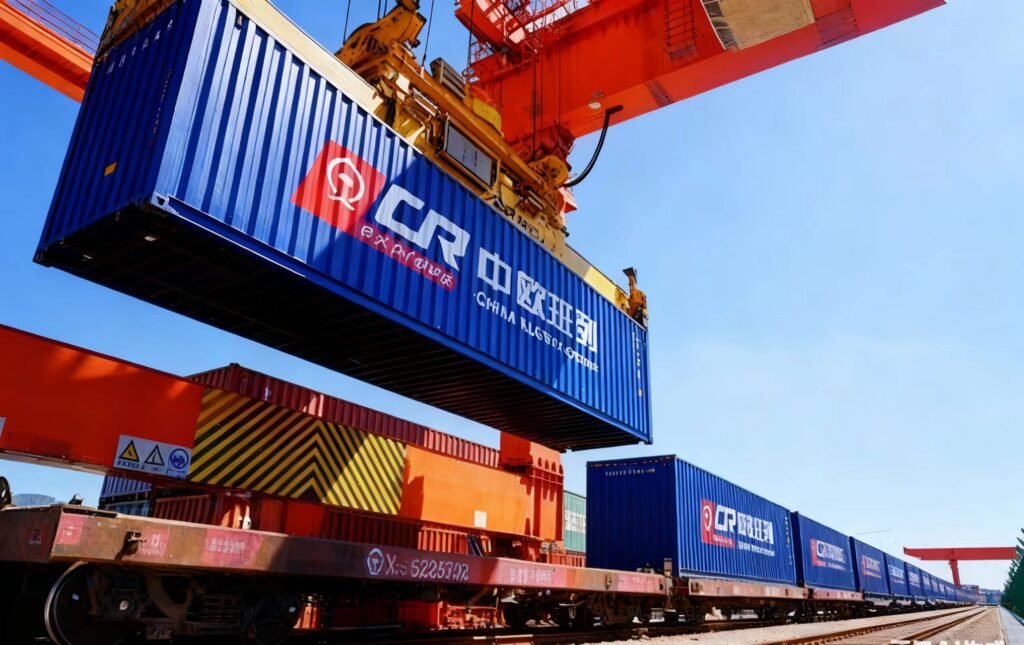
Rail transport—often referred to as the China-Europe Railway Express—has become one of the most popular choices for medium-to-large shipments. It offers faster delivery than sea freight and significantly lower costs compared to air freight.
Best for:
- Electronics, machinery, automotive parts
- High-value goods requiring stable transit time
- Medium-volume shipments that are time-sensitive
Advantages:
- 12–18 days average transit time
- Stable scheduling and predictable delivery
- Full-container and railcar options
- Suitable for both eastbound and westbound shipments
For companies that require reliability without paying air freight prices, rail transport provides an excellent cost-performance ratio.
2. Truck Transport: Flexible and Direct to Destination
Truck transport offers unmatched flexibility. Unlike rail, which relies on fixed stations, trucks can pick up and deliver cargo directly from door to door.
Best for:
- Urgent shipments
- Special cargo such as refrigerated, oversized, or dangerous goods
- Customers needing fast customs clearance or flexible routing
Advantages:
- Fully trackable
- Direct delivery without transloading
- Supports TIR for smooth cross-border movement
- Ideal for remote regions without rail access
For time-sensitive or special cargo, truck transport is often the optimal choice.
3. LCL / Consolidation Transport: Best Value for Small Shipments
If your cargo volume is not enough for a full container, LCL (Less than Container Load) allows you to ship smaller quantities at lower cost.
Best for:
- Small businesses
- E-commerce sellers
- Irregular or low-volume shipments
Advantages:
- Pay only for the space you use
- Nationwide pickup and warehouse consolidation
- Reliable sorting and packaging to protect goods
LCL provides small shipments the benefit of professional logistics networks at affordable rates.
4. Supply Chain & Customs Services: Ensuring Smooth Delivery
A successful cross-border shipment depends on more than transport alone. Customs clearance, warehousing, inspection, and supplier verification all play an important role.
A good logistics partner should offer:
- Import/export customs declaration
- Temporary and bonded warehousing
- Cross-border payment support
- Supplier background checks
- Pre-shipment inspection
These services help minimize delays and ensure compliance across all transport stages.
Conclusion: Choose the Solution That Fits Your Business Needs
Every logistics mode has unique advantages. The best choice depends on your shipment size, timing, cargo type, and destination.
Rail = balanced speed & cost
Truck = flexibility & special cargo
LCL = economical for small shipments
Supply Chain Services = essential for smooth operations
If you need support selecting the best China–Europe logistics option, the ShineHi Logistics team provides customized transport and supply chain solutions for businesses of all sizes.