
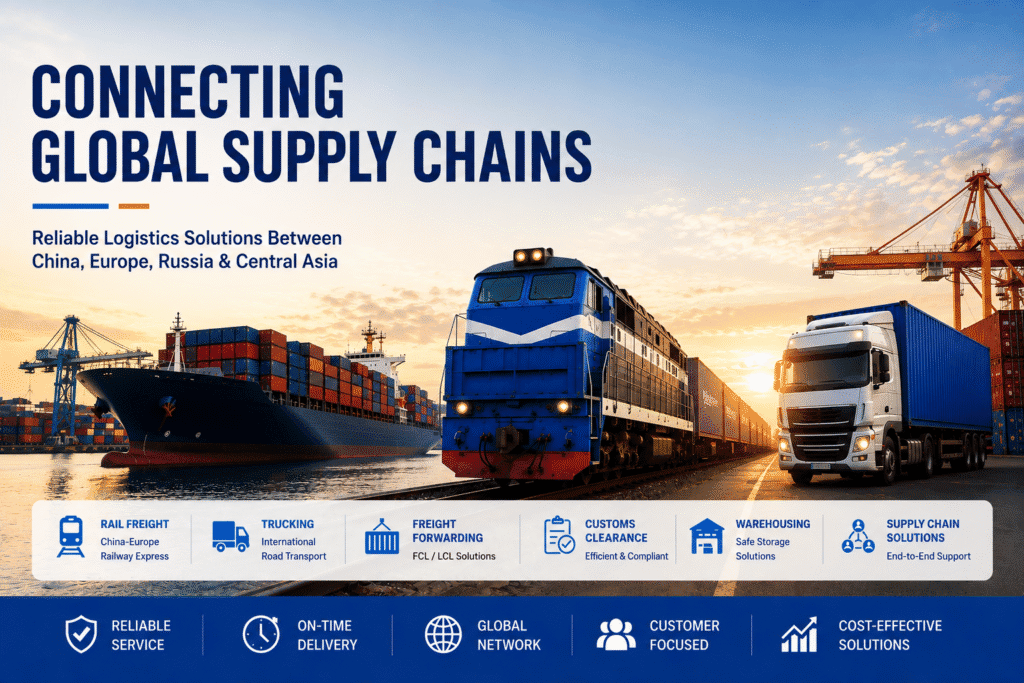
As global trade continues to evolve, businesses importing and exporting between China and Europe face an important logistics decision: should they choose China-Europe Railway transportation or traditional Sea Freight?
Both transportation methods offer unique advantages, but selecting the right solution can significantly impact delivery times, logistics costs, inventory management, and customer satisfaction.
In this guide, we compare China-Europe Railway and Sea Freight to help businesses determine the most suitable transportation strategy for 2026.
What Is China-Europe Railway Transport?
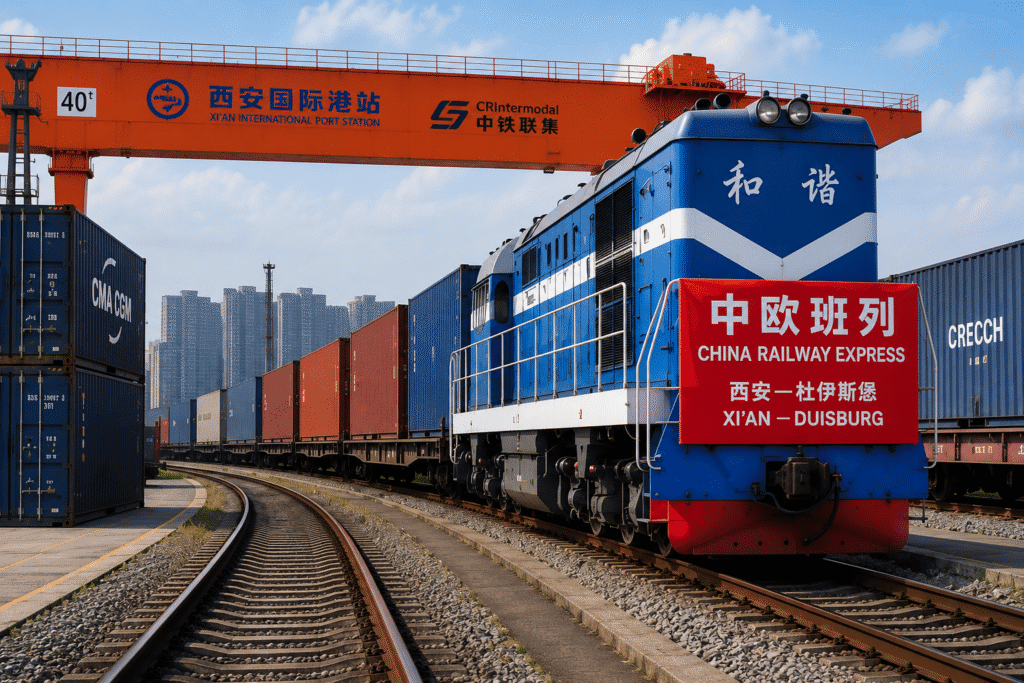
China-Europe Railway Express is an international rail freight network connecting major Chinese cities with destinations across Europe through Central Asia and Russia.
The service has become increasingly popular among manufacturers, distributors, wholesalers, and e-commerce businesses seeking a balance between cost and transit speed.
Key departure cities include:
- Xi’an
- Chongqing
- Chengdu
- Zhengzhou
- Wuhan
- Yiwu
Major European destinations include:
- Germany
- Poland
- Netherlands
- Belgium
- Czech Republic
- Hungary
What Is Sea Freight?
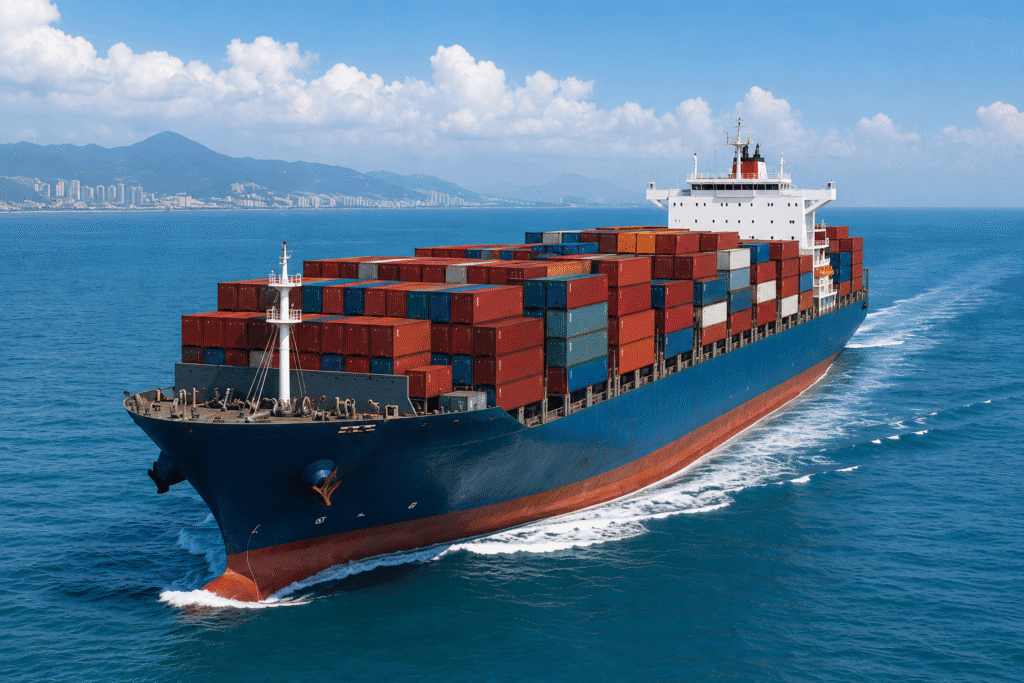
Sea Freight remains the most widely used transportation method for international trade.
Containers are transported from major Chinese ports to European ports via ocean carriers.
Common Chinese ports include:
- Shanghai
- Shenzhen
- Ningbo
- Qingdao
- Xiamen
Sea Freight is particularly suitable for large-volume shipments and cost-sensitive cargo.
Transit Time Comparison
One of the most significant differences between Railway and Sea Freight is transit time.
China-Europe Railway
Average transit time:
15–25 days
Sea Freight
Average transit time:
30–50 days
For businesses managing seasonal products, inventory replenishment, or urgent customer orders, Railway transportation often provides a competitive advantage.
Cost Comparison
Transportation cost is another key consideration.
Railway Freight
Rail transportation generally costs more than Sea Freight but significantly less than Air Freight.
Advantages include:
- Faster delivery
- Lower inventory holding costs
- Reduced stock shortages
Sea Freight
Sea Freight remains the most economical option for large-volume shipments.
Advantages include:
- Lower transportation cost per unit
- Suitable for heavy cargo
- Ideal for non-urgent shipments
Reliability and Stability
Supply chain reliability has become increasingly important in recent years.
Railway transportation typically offers:
- Stable schedules
- Fewer weather-related disruptions
- Better shipment visibility
Sea Freight may experience:
- Port congestion
- Vessel delays
- Seasonal schedule fluctuations
Businesses requiring predictable transit times often prefer Railway solutions.
Environmental Impact
Sustainability is becoming a major factor in logistics planning.
Compared with Air Freight, China-Europe Railway significantly reduces carbon emissions.
Many companies seeking greener supply chains are incorporating Railway transportation into their logistics strategies.
When Should You Choose China-Europe Railway?
Rail Freight is often the best option when:
- Products have moderate urgency
- Inventory turnover is important
- Delivery speed affects customer satisfaction
- Businesses want a balance between cost and transit time
Examples include:
- Electronics
- Machinery Parts
- Industrial Equipment
- Consumer Goods
- Retail Products
When Should You Choose Sea Freight?
Sea Freight is often the better choice when:
- Cargo volume is large
- Delivery timelines are flexible
- Transportation cost is the primary concern
- Products are bulky or heavy
Examples include:
- Raw Materials
- Construction Materials
- Industrial Machinery
- Bulk Commodities
How ShineHi Logistics Can Help
At ShineHi Logistics, we help businesses develop efficient transportation strategies between China, Europe, Russia, and Central Asia.
Our services include:
- China-Europe Railway Express
- International Trucking
- Multimodal Transportation
- Customs Clearance
- Warehousing Solutions
- Supply Chain Support
Our experienced team works closely with customers to identify the most suitable logistics solution based on cargo type, transit requirements, and budget.
Conclusion
There is no one-size-fits-all solution when choosing between China-Europe Railway and Sea Freight.
Rail Freight offers faster delivery and improved supply chain responsiveness, while Sea Freight remains the most economical option for large-volume shipments.
The best choice depends on your cargo, budget, and business objectives.
If you are planning shipments between China and Europe and need professional logistics support, ShineHi Logistics is ready to help you build a reliable and cost-effective transportation solution.